
Northern Ireland Screen is fantastic. So how do we grow it?
Few public bodies in Northern Ireland can show a return like NI Screen’s. That is exactly why its next four years shouldn’t be left to a year-by-year budget.
Download the full briefing (PDF, 3 pages) · See the figures on the NI Screen Industry dashboard
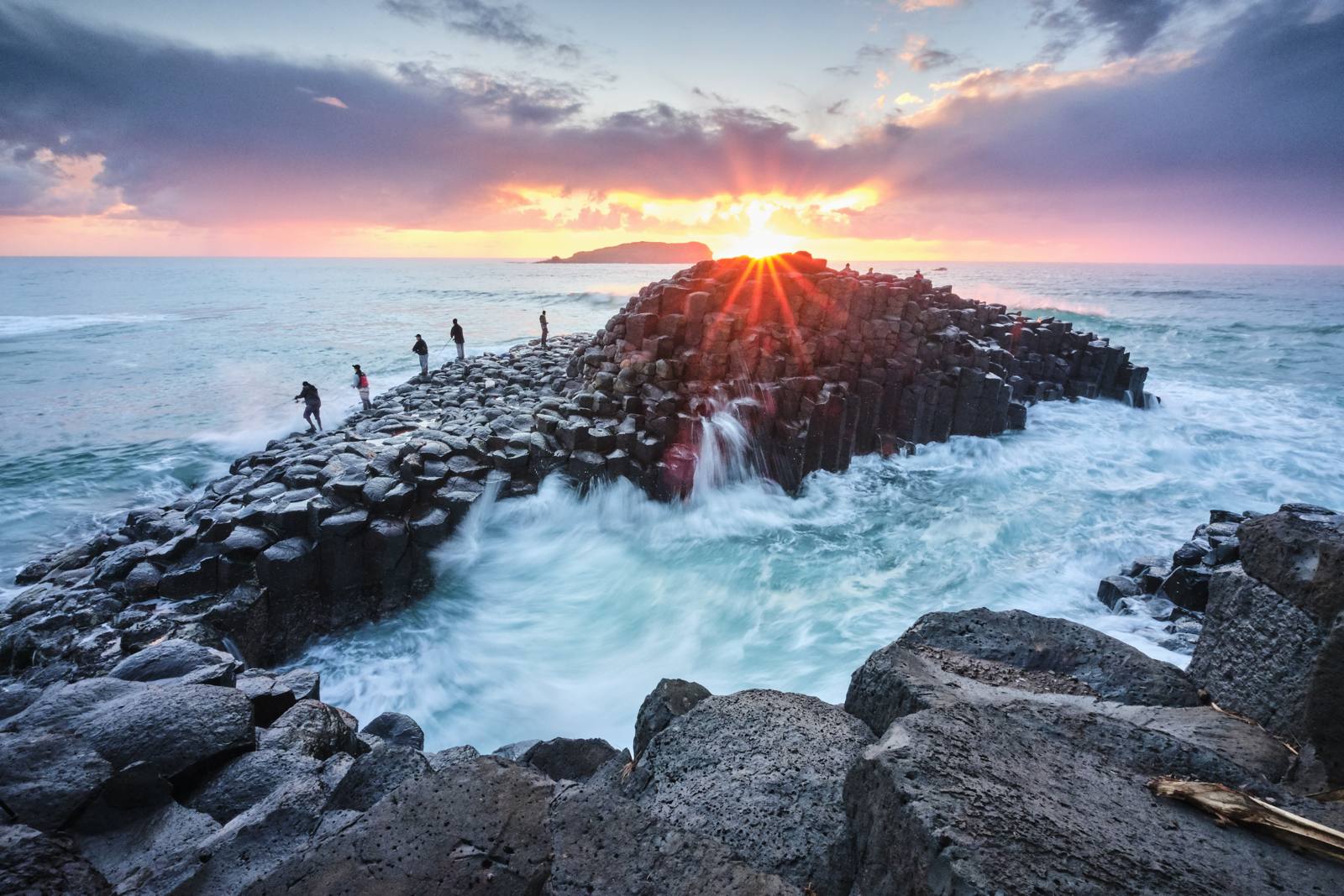
Between April 2022 and March 2026, Northern Ireland Screen received about £73 million from the Department for the Economy. Over the same strategy, productions it backed spent £477 million in Northern Ireland, beating a £442 million target, and won more than 100 awards. On my rough arithmetic that is around £6.50 of local spend for every pound of departmental money, and the Department’s money paid for skills and other work as well as production.
This isn’t a spicy piece about a failing body. It is the opposite. NI Screen is one of the best things the Executive funds. My worry is about what happens around it.
Why standing still is the risk
Four pressures are building at once.
- Money. NI Screen’s grant from the Department has risen from about £14 million a year in 2018/19 to about £20 million. But the Department’s day-to-day budget falls from £814.5 million to £798.4 million in 2026/27, against roughly £134 million of pressures. In evidence to the Assembly’s Economy Committee in March, an official said that protecting skills funding in full would mean abolishing Invest NI, Tourism NI and NI Screen. That was an illustration of scale, not a plan. But it shows how exposed a discretionary budget is.
- Dublin. Ireland’s Section 481 credit pays 32%, capped at €125 million a project, with a 40% uplift for smaller features and new credits for visual effects and unscripted shows. Irish production spend hit a record €544 million in 2025, and the industry there is asking for an extra regional uplift outside Dublin and Wicklow. That would sit right on our border.
- Footloose money. Across the UK, 85% of the £6.8 billion spent on film and high-end TV in 2025 was inward investment. It goes where the deal, the crew and the stage space are best this year.
- One-year funding for language content. The Irish Language and Ulster-Scots broadcast funds have lived on short-term settlements. I could not find a confirmed allocation for the current year.
Three scenarios
I’ve run three simple scenarios for the four years of NI Screen’s new strategy, The Full Picture (2026–30). They are illustrative, built on the last strategy’s results, not forecasts.
1. Squeezed. Grant-in-aid is cut by a fifth to fund pressures elsewhere. NI Screen protects the big productions and cuts training, games and smaller local work first, because that is where the contracts aren’t yet signed. Headline spend holds for a year or two, then slips as crews drift to Dublin and Manchester. The cheapest saving on paper becomes the most expensive in practice, because a crew base takes a decade to build and a couple of quiet years to lose.
2. Steady. Funding holds at around £20 million a year, year by year. NI Screen repeats its last four years: roughly half a billion pounds of local spend, strong crews, a good reputation. But every big studio decision waits on the next budget, Studio Ulster’s growth depends on demand nobody can commit to, and the language funds remain a cliff edge every spring.
3. Grown. The Executive commits a four-year envelope, and the sector shifts its mix towards things that keep their value between productions: stages with clean power, local intellectual property, games and animation, and a proper locations service. Inward productions still matter, but they land on infrastructure that earns between shoots. This is the scenario worth arguing for, and it doesn’t need much more money. It needs certainty and a few joined-up decisions.
Five ways to grow it
1. A four-year settlement, not an annual scramble
The Full Picture runs to 2030. Its funding should too, as a multi-year envelope agreed in this budget round, with the UK Government committing the Irish Language and Ulster-Scots funds for the same period. Streamers sign multi-season deals. They need to know the partner will still be there.
2. Plug the studios into clean power
NI Screen already leads here. Its 2025 sustainability scheme was described as a UK first: top-up funding for productions that report their carbon through albert, run on HVO instead of diesel, and hire a sustainability adviser from week one. The next step is the stages themselves. Grid connections, rooftop solar and battery storage at Titanic, Belfast Harbour and Giant’s Park would let productions plug in instead of running generators. I found no published renewable energy figures for any NI studio. Publishing metered energy use, and joining the albert Studio Sustainability Standard, should be a condition of any public capital.
This matters commercially. A streamer’s productions sit in its Scope 3 emissions. A studio that can show low, measured emissions per shooting day is easier to choose. That is the same argument I make to manufacturers supplying European customers: your carbon data is part of your offer.
3. One door for locations
Northern Ireland sold itself to the world on landscape: the Causeway coast, the Mournes, the Dark Hedges, our castles and harbours. Yet a production filming across the province can deal with several councils, the Department for Infrastructure, NIEA, the National Trust and private owners, each with its own process. A single filming protocol across the 11 councils and Stormont departments would help. So would a register of publicly owned locations, from disused industrial and defence sites to forests and heritage estates, with clear terms and a share of location fees going back to the communities that host the crews.
Done well, filming pays for the public realm. A road closure, a cleared site or a restored building can leave something behind. It is a practical case for the guardianship I’ve written about in improving the public realm.
4. Compete with Dublin less, co-produce with it more
A subsidy race along the border would cost both governments and help neither. The Irish Government’s €14 million Shared Island Media Fund, running 2026–28, already backs cross-border film, TV and radio. NI Screen and Screen Ireland could go further: jointly market the north-west and border counties, build co-production pipelines, and share crews and facilities. The Full Picture already names an all-island approach to incentives as a priority. That is the right instinct.
5. Grow what stays when the cameras leave
Games, animation and virtual production keep their value between shoots. Studio Ulster’s £72 million virtual production facility opened in June 2025, and said in March that demand was beating its forecasts. NI Screen’s games calls offer up to £15,000 a project, which is a start-up sum, not a scale-up one. Larger awards for growing studios, links between Studio Ulster and games-engine talent, and animation beyond pre-school would turn one-off production spend into local businesses with their own intellectual property. Belfast is already a UNESCO City of Music. A City of Film bid would make the same point to the world.
The strongest counter-argument
“Chasing inward productions is a subsidy race NI can’t win. The jobs are freelance, the tax credits are set in London, and every pound spent here is a pound not spent on schools or hospitals.”
There is truth in this. NI does not control UK tax credits, and the money is footloose. But the evidence points the other way on depth: 88% of crew and 73% of heads of department on major productions in the last strategy lived in NI, and 73% of trainees were still in work a year on. More than 80% of the Blue Lights budget for its first two series was spent here. The answer to footloose money is not to stop competing for it. It is to build the things that make it stay: skills, clean stages, local stories and a place that is easy to film in.
What would change my mind
Evidence that local spend per pound of public money is falling, or that local crews are being replaced by imported ones as productions grow. If either shows up in the next set of results, the case for growth would need rethinking.
Sources
- Committee for the Economy response on the 2026–27 budget, including NI Screen funding history and DfE evidence (NI Assembly, 17 April 2026)
- NI-made cinema and TV blockbusters bring in nearly £500m (Irish News, April 2026)
- Northern Ireland Screen delivers £477 million for local economy (Business Eye)
- Northern Ireland Screen Business Plan 2024/25 (via NIOPA)
- Official BFI statistics for 2025 (BFI, 5 February 2026)
- Revenue eBrief 068/26 on the Section 481 film relief (Revenue, 30 March 2026)
- Why now is a really important moment for Ireland’s screen industry (Irish Times, 14 October 2026)
- Ireland funds cross-border production (Screen Global Production, 12 December 2025)
- Irish Language and Ulster-Scots Broadcast Funds, written answer HL3344 (23 December 2024)
- Northern Ireland Screen launches Sustainability Support scheme (Business Eye, January 2025)
- Studio Ulster virtual production facility opens (Screen Global Production, 20 June 2025)
- Studio Ulster to expand in response to demand (Irish News, March 2026)
- Games Development Call, summer 2026 (nibusinessinfo)
- Blue Lights boosted the NI economy by £20m (Advanced Television, 15 November 2024)
- UNESCO Creative Cities in the UK (UK National Commission for UNESCO)
Go further: the NI Screen Industry dashboard sets out the funding, the results, the Irish offer next door and the three scenarios, with every table downloadable as CSV. The full briefing (PDF) has the whole piece and its sources.
Robert J. Park is an independent environment, carbon and public-affairs consultant based in Larne, Northern Ireland. He helps organisations make their case to Stormont and Westminster and measure the carbon in what they do.
Agree or disagree? Get in touch on LinkedIn or WhatsApp @robertjpark.