
Who cuts the hedge? Roads, verges and ditches in Northern Ireland
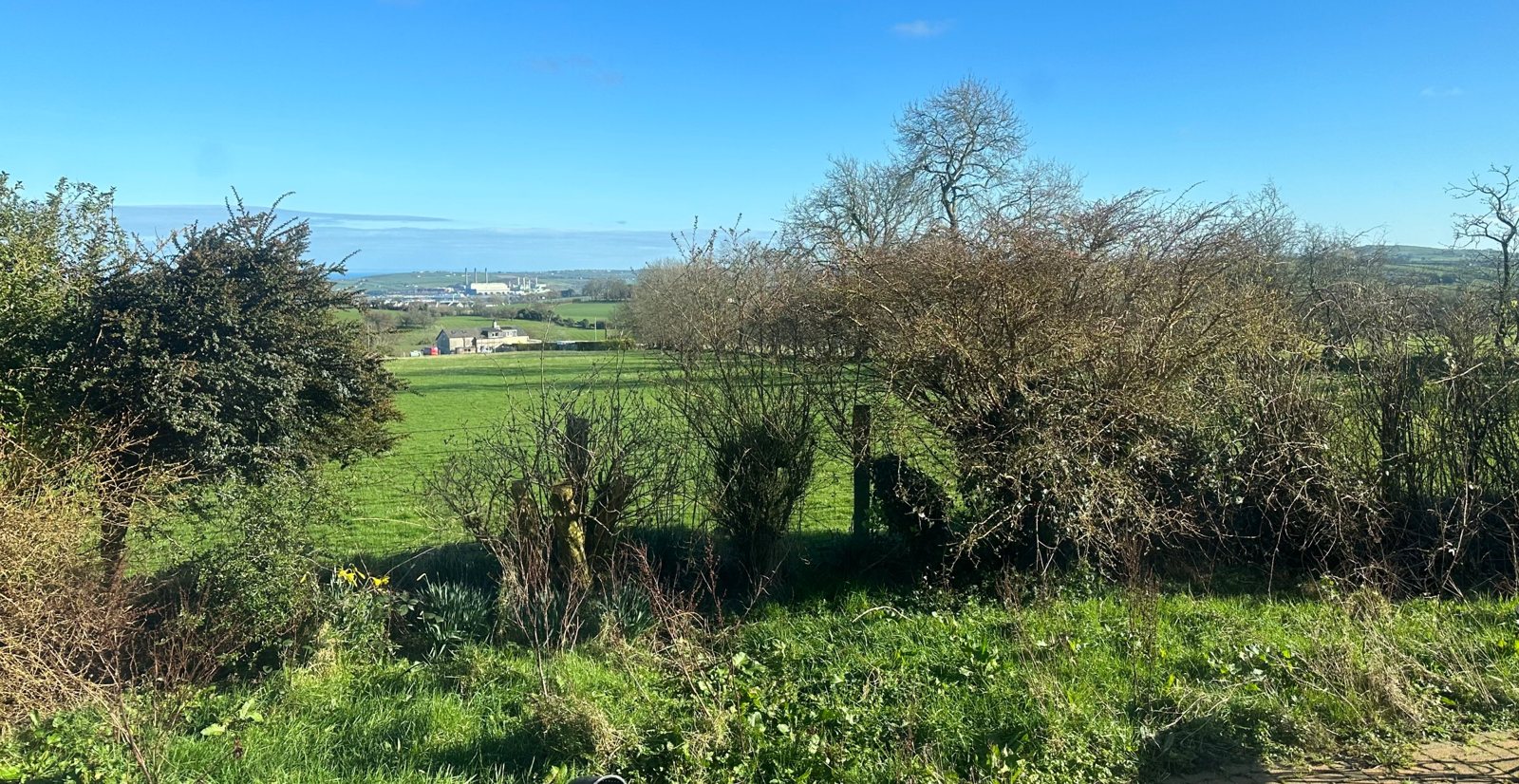
Drive any country road in Northern Ireland in October and you will meet a tractor with a flail. Most people assume somebody is paying for that. I did. So I went looking for the payment, and for the rule that makes farmers do it.
I found neither. What I found instead was a system where the law defines the road, says nothing about the hedge, and leaves the line between them to be argued.
This is general information, not legal advice.
The road is defined. The hedge is not.
The Roads (Northern Ireland) Order 1993 defines a road as a public road maintainable by the Department. It is defined by who maintains it, not by tarmac or kerbs.
The verge is part of that road. The only statutory definition calls it “the unpaved area flanking a carriageway and forming part of the road”, and it sits in a 1995 road traffic rule about parking lorries.
The hedge has no definition in roads law. Nor does the ditch. Nor does the road boundary itself.
Who owns what
- The soil under the verge usually belongs to the neighbouring landowner, often to the centre line of the road. The Department for Infrastructure has said so itself.
- The surface is the Department’s to control. It cuts the verge grass, for road safety only.
- The hedge behind the verge belongs to the land, and so does the job of cutting it. nidirect is plain about that.
So a landowner owns soil they cannot use, and a hedge they must keep back from a road they do not control.
Is anyone paid to cut?
I found no payment for trimming a roadside hedge. Not from the Department for Infrastructure, and not in DAERA’s current scheme rates.
- DAERA’s Farming with Nature scheme pays £6.49 a metre to plant a new hedge. It lists nothing for managing an old one.
- Older schemes did pay for boundary work, which may be where the belief comes from.
- England is different. Its Sustainable Farming Incentive pays £13 per 100 metres, per side, per year, to manage hedges.
I cannot prove a negative. Two information requests, one to each department, would settle it.
Is anyone compelled?
Only when a hedge gets in the way.
The Department can serve a notice under Article 50 of the Roads Order. The owner then has at least 21 days. Ignoring it is an offence, and the Department can do the work and send the bill.
Most farmers never see one. They cut because they have the machine, and because an overgrown hedge takes field width and blocks gateways.
Roads against nature? Not quite.
It looks as if two departments pull in opposite directions. One wants clear roads. The other wants nesting birds left alone.
One rule on timing joins them. DAERA’s standard bans hedge cutting from 1 March to 31 August, with an exception for road safety on the road side only. That is why all the cutting happens in autumn and winter.
The real gap is elsewhere:
| Matter | Who enforces | Who it reaches |
|---|---|---|
| Cutting in the closed period | DAERA, by payment penalty | Farmers claiming the area payment |
| Destroying an active nest | Police | Everyone |
| Removing a hedge | DAERA, by permission | Claimants |
| Hedge obstructing a road | Department for Infrastructure | Everyone |
| How hard or how often a hedge is cut | Nobody | — |
DAERA advises cutting one year in three. That is advice. From September to February, every hedge can be flailed every year.
The ditch
A ditch the Department dug to drain the road is the Department’s drain. It can dig one on neighbouring land without asking, and must pay compensation for damage done in the digging.
But it only has a power to keep that drain clear, not a duty. In a 2023 Lands Tribunal case, a landowner near Ballymena was flooded from a 140-metre roadside ditch the Department had built. There was no record of it ever being cleared. His claim failed.
What this means
- For landowners: the hedge is yours whether or not anyone has told you. The duty does not wait for a notice.
- For policy: nobody owns the question of how roadside hedges are managed. Roads law cares about obstruction. Farm rules care about dates. Neither pays for good management.
- For the public realm: the boundary between public road and private land is undefined in statute. It is settled stretch by stretch, by evidence.
Robert J. Park is an environment, carbon and public affairs consultant based in Larne, Northern Ireland. Download the briefing, *Who cuts the hedge?* (PDF, 3 pages), with the definitions, tables and sources. This is general information, not legal advice. If your council or organisation wants a view on roadside land, drainage or the public realm, email robert@robertjpark.co.uk.