
A briefing on every element: the interactive periodic table
Every rule I work with comes down to chemistry in the end. So I have built a periodic table that says what each element means for the work.
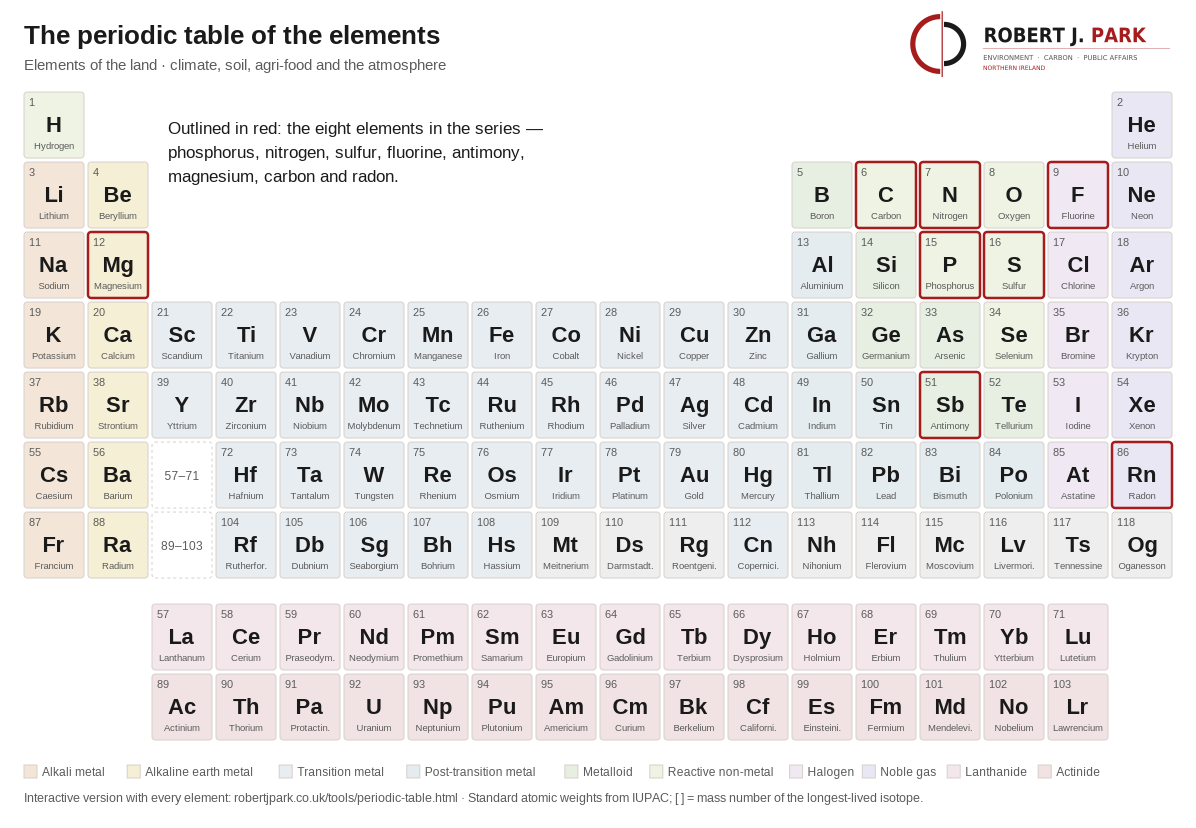
Carbon budgets count carbon. The Nutrients Action Programme is about nitrogen and phosphorus. The F-gas rules are about fluorine. Radon decides how a house is built in parts of Northern Ireland. Antimony is on the UK’s critical minerals list. Behind each regulation is an element, and most people never see the link.
The interactive periodic table is now on the Dashboards page and in Learn. It is free and runs in your browser.
What it does
- Hover over any element for one line on what it means for climate, greenhouse gases, the air, land, soil, water and health.
- Click it for a briefing: how it was discovered and how stable it is, where it occurs in nature, its part in climate and pollution, how it is made and used, its health effects and hazards.
- Every element is covered, all 118, including the superheavy ones that exist for less than a second. Oganesson, the heaviest, has been made only a handful of atoms at a time.
- Search and filter by name, symbol, number or type of element.
Eight elements in depth
Phosphorus, nitrogen, sulfur, fluorine, antimony, magnesium, carbon and radon each have a full briefing. Each covers climate, soil, land, agri-food and the atmosphere, with the rules as they stand in Northern Ireland. Each also has the safety basics: COSHH classification, workplace exposure limits, UN numbers for transport, and the compounds you meet in nature, manufacturing and the climate. The PDFs are on the Learn page.
Who it is for
Farmers and agronomists, site managers, planners, council officers, teachers and students. Anyone who meets these elements in a regulation, a safety data sheet or a soil test and wants to know why they matter.
If there is an element you would like a full briefing on next, tell me.
Robert J. Park is an environment, carbon and public affairs consultant based in Larne, Northern Ireland. The descriptions are general reference, checked 21 November 2026; hazard notes give headline classifications only, so always work from the supplier’s safety data sheet. This is general information, not legal, safety or agronomic advice. Created with assistive technology including AI and re-checked against the official sources listed.