Focus on Hospitality, Retail & Leisure · 30 October 2026
Visitor spend is up 9%. Hotels are emptier, and new rules reach the counter.
Busy tills, rising overheads: how hotels, shops, pubs, cafés and leisure venues can cut energy and waste costs and get ready for new rules.
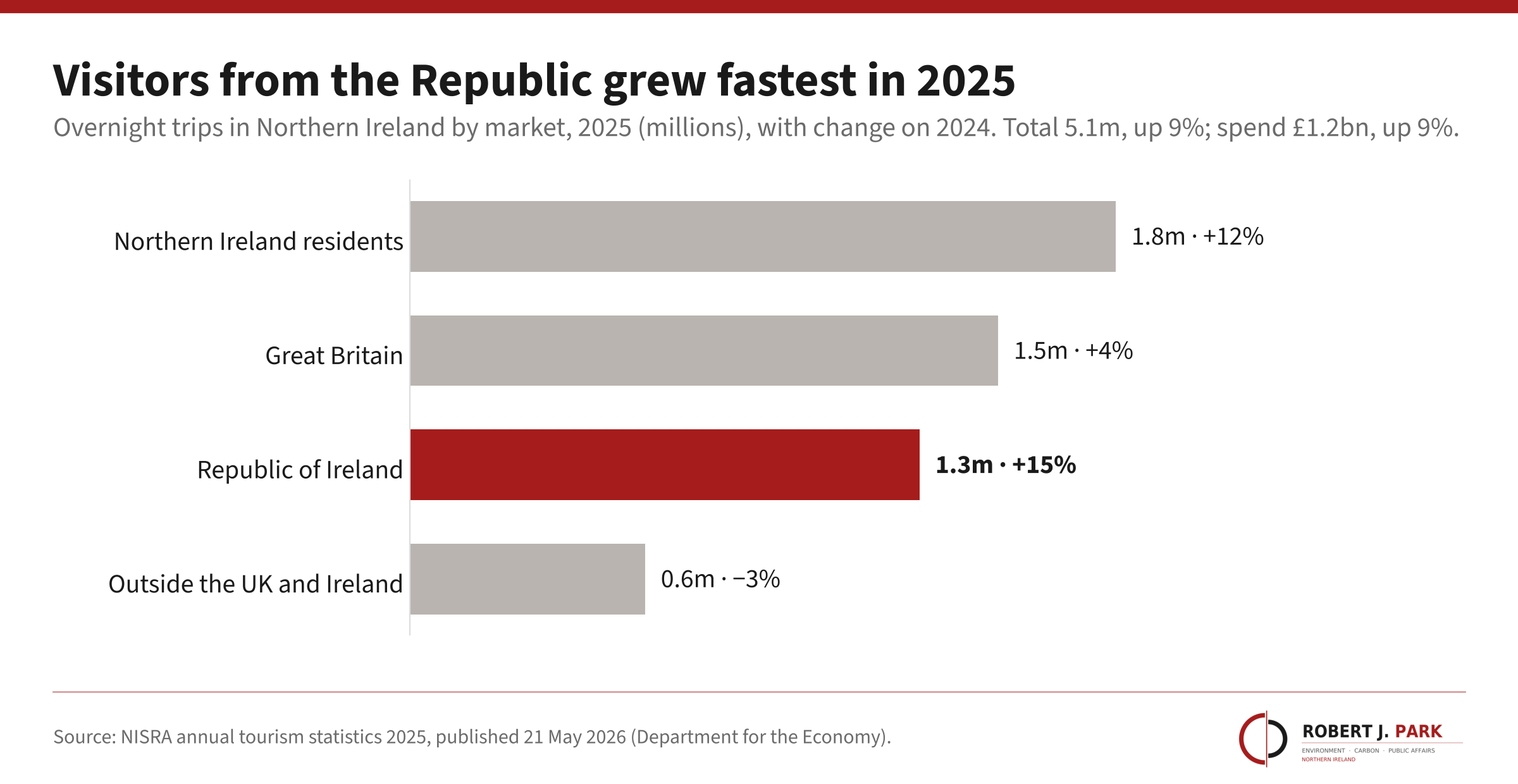
Tourism in Northern Ireland grew again in 2025: 5.1 million overnight trips and £1.2 billion of spend, both up 9%. Visitors from the Republic of Ireland grew fastest, up 15%. But more trips did not mean fuller hotels: room occupancy fell to 65%. For hospitality, retail and leisure, energy, refrigeration, food waste and packaging are the costs that can be managed, and each is now also a compliance issue.
Where emissions sitHeat, cold and leaks
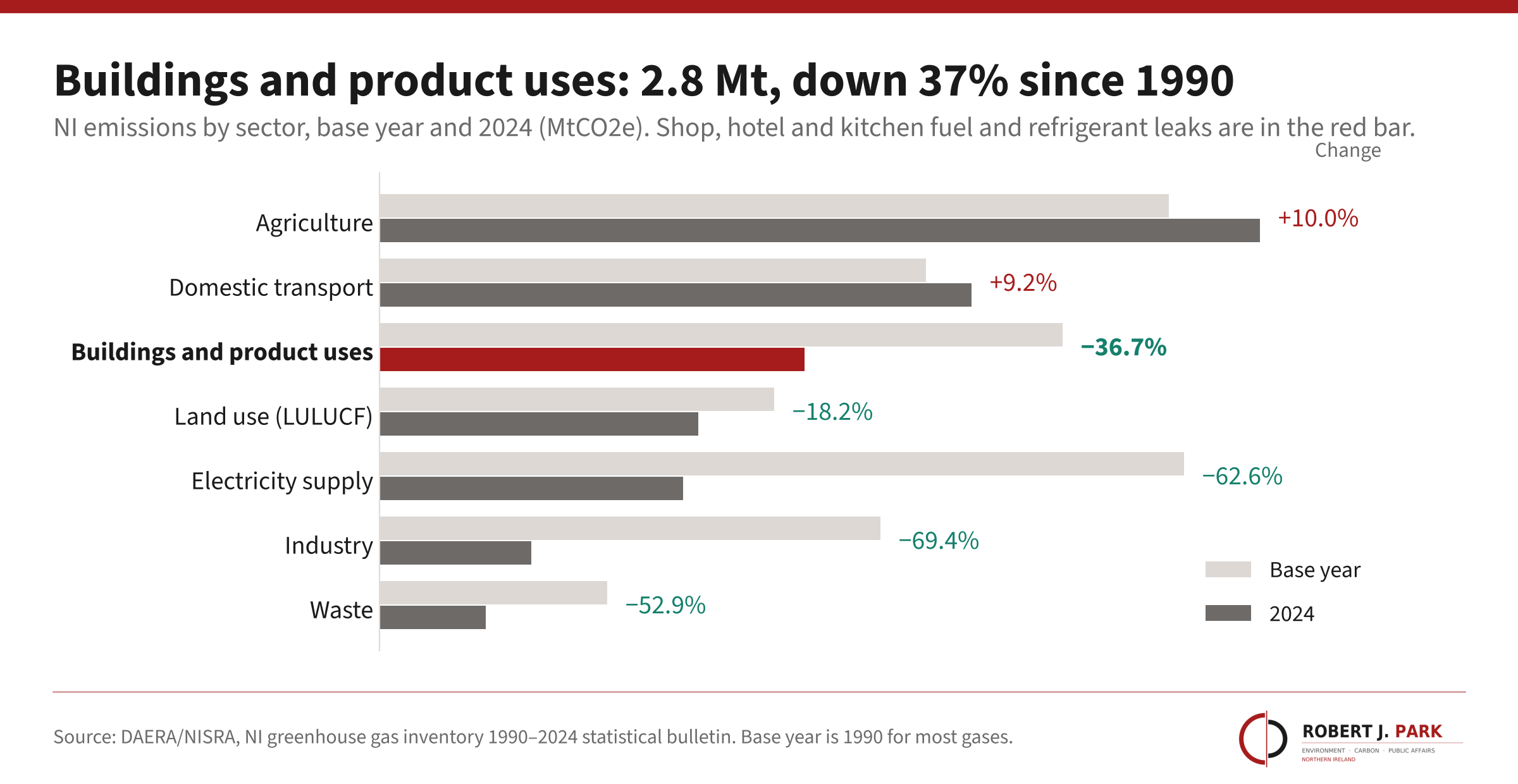
Gas and oil burned in shops, hotels, pools and kitchens, and refrigerant leaking from fridges, chillers and air conditioning, are counted in the "buildings and product uses" sector of the NI inventory: 2.8 MtCO2e in 2024, 15.5% of the total, up 5% on 2023, mainly because homes burned more fuel. Electricity is counted separately, and half of NI's electricity now comes from renewables.
Scopes 1, 2 and 3The menu is the biggest part
Scope 1 is gas, oil and LPG for heating, hot water and cooking, plus refrigerant top-ups. Scope 2 is bought electricity for lighting, refrigeration and air handling. Scope 3 is food, drink and stock bought in, packaging, laundry, waste, and guest and staff travel. For most restaurants and food retailers, the food and drink bought in is the largest share, so menus and buying matter as much as the boiler. Last week's Focus on Food & Drink Processing covers the supply chain behind the menu.
Energy and coolingThe quickest savings are still controls
Refrigeration runs day and night, and kitchens and pools lose heat. The fastest paybacks usually come from controls, door seals, night blinds on open fridges, LED lighting and heat recovery, before any large spend.
Grant support is thin. Invest NI's Energy Efficiency Capital Grant is paused while it is reviewed, and the Resource Efficiency Capital Grant stopped issuing applications on 27 March 2026. Plan projects that pay back on their own, and be ready if the schemes reopen.
Refrigerants. The EU's 2024 F-gas Regulation applies directly in NI, unlike in Great Britain. From 1 January 2027, new self-contained (plug-in) air conditioners and heat pumps up to 50 kW, small split air-to-water heat pumps and small chillers can no longer use refrigerants with a global warming potential of 150 or more. The EU's HFC supply quota also roughly halves in 2027, so expect refrigerant prices to rise. Ask your installer for low-impact options before you replace any cooling kit, and fix leaks now.
Waste and packagingThree rules on one counter
- Food waste. Businesses producing more than 5kg of food waste a week must present it for separate collection and must not put it down the drain.
- Packaging EPR. Larger businesses that supply packaged goods pay packaging fees under Extended Producer Responsibility, now in its second year. Smaller shops and venues see the cost in supplier prices.
- Deposit return. From October 2027, drinks in PET plastic, steel and aluminium containers from 150ml to 3 litres will carry a deposit. UK Deposit Management Organisation Ltd runs the scheme and the network of return points. Retailers selling drinks should plan for questions about return points and space.
Coffee, cocoa and timberDeforestation rules reach the café on 30 December
From 30 December 2026 the EU Deforestation Regulation applies in NI. The UK Government's own example is an NI coffee shop buying beans from a GB roastery: the business that first places the product on the NI market needs due diligence information. Cafés, bakeries, hotels and shops buying coffee, cocoa, palm-oil products, beef or timber from GB suppliers should check who is doing the due diligence and ask for the reference numbers. Most micro and small businesses have until 30 June 2027.
LeisurePools and gyms are energy-heavy
Swimming pools, spas and leisure centres use a lot of heat and power, and many are run by councils with their own climate duties and procurement rules. Pool covers, heat recovery and better plant controls are proven measures. Councils get their own Focus on issue on 27 November.
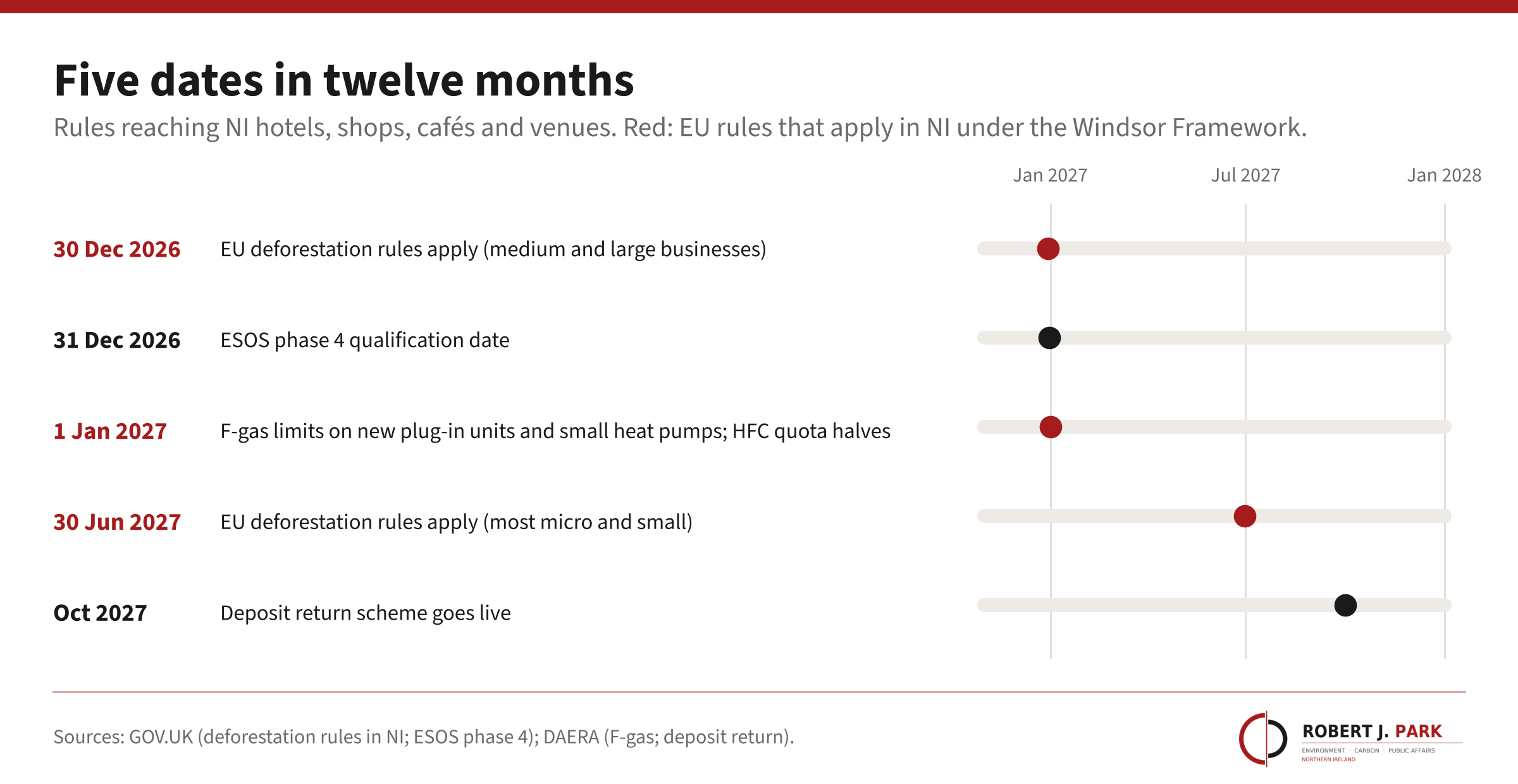
Policy and deadlinesFive dates in twelve months
| When | What | Who it affects |
|---|---|---|
| 30 Dec 2026 | EUDR applies in NI (medium and large businesses) | Businesses placing coffee, cocoa, palm-oil, soya, beef or timber products on the NI market |
| 31 Dec 2026 | ESOS phase 4 qualification date | Groups with 250+ staff, or over £44m turnover and £38m balance sheet |
| 1 Jan 2027 | Further EU F-gas limits on new plug-in units, small heat pumps and chillers; HFC quota halves | Anyone buying cooling kit in NI |
| 30 Jun 2027 | EUDR applies to most micro and small businesses | Independent cafés, bakeries and shops |
| Oct 2027 | Deposit return scheme goes live | Drinks retailers, pubs, hotels, venues |
This monthThree things a venue or shop can do
- Check refrigeration and kitchen kit before the Christmas peak: door seals, defrost settings and night covers. Log every refrigerant top-up, because it is a Scope 1 emission and a sign of a leak.
- Weigh a week's food waste. If it is over 5kg, make sure it is collected separately, and use the figure to set a reduction target.
- Ask your coffee, chocolate and palm-oil product suppliers how they will meet the deforestation rules from 30 December, and what information they will pass on to you.
See the numbers behind this briefing
The NI Hospitality, Retail and Leisure dashboard sets out every figure used here: trips by market, occupancy, building emissions, the refrigerant limits on new equipment, grant status and deadlines. Each chart can be downloaded as a CSV.
How big is your footprint?
The free Carbon Jigsaw turns your electricity, gas, oil, water and waste bills into a rough Scope 1, 2 and partial Scope 3 estimate in minutes. Nothing leaves your browser.
The full briefingRead Focus on Hospitality, Retail & Leisure
The full 5 pages, with the charts, deadlines and every source.
SourcesWhere the figures come from
- Annual tourism statistics 2025 (NISRA, 21 May 2026)
- Northern Ireland tourism statistics 2025: key figures (NISRA)
- NI greenhouse gas inventory 1990–2024 statistical bulletin (DAERA/NISRA)
- NI GHG inventory user notes: sector definitions (NISRA)
- Electricity consumption and renewable generation, year ending June 2026 (DfE)
- Energy Efficiency Capital Grant (Invest NI, paused; page updated 27 October 2026)
- Resource Efficiency Capital Grant (Invest NI)
- Fluorinated greenhouse gases (DAERA)
- EU F-gas 2027 bans (Projet Celsius, September 2026)
- Food Waste Regulations (NI) 2015
- Deposit Return Scheme (DAERA)
- Deforestation-free products in NI (GOV.UK)
- ESOS phase 4 (GOV.UK)
Focus on is a weekly briefing by Robert J. Park, an independent environment, carbon and public-affairs consultant based in Larne, Northern Ireland. Robert helps hotels, retailers and leisure operators cut energy and waste costs, build carbon inventories and prepare for new packaging, refrigerant and deforestation rules.
Get in touch on LinkedIn or WhatsApp @robertjpark.